Luxesur National Guide
Water DamageWater Extraction Process Guide
Water extraction is often one of the first steps taken after significant water damage. This guide explains the general process used to remove water and prepare for drying.
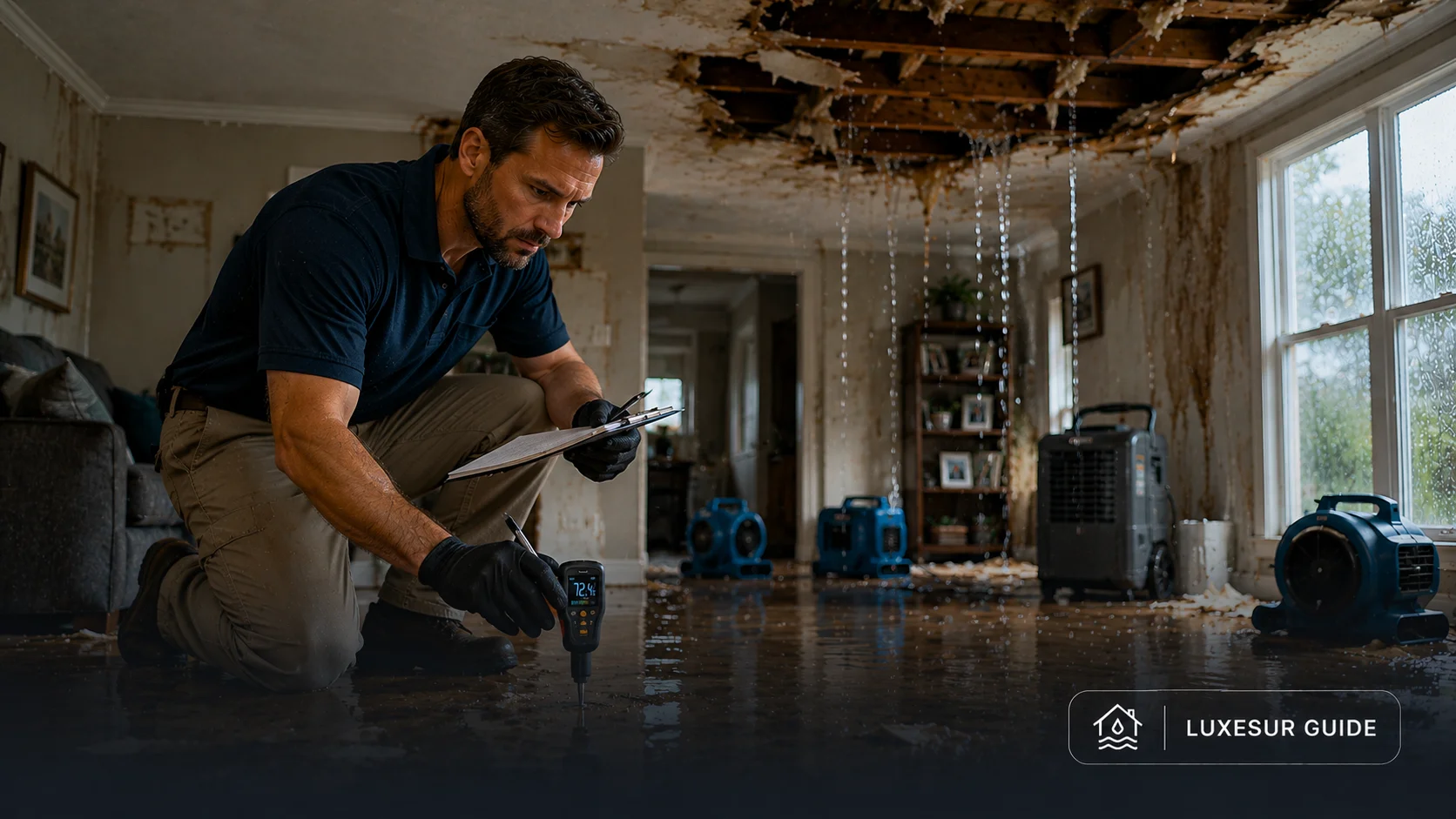
First actions
Prioritize safety before inspection or cleanup
- Keep people away from sagging or water-filled ceilings.
- Avoid water near outlets, lights, and electrical panels.
- Stop the water source only when it can be done safely.
- Document affected areas before moving or discarding materials.
- Begin extraction and drying after immediate hazards are controlled.
Help Available
Need help after water damage?
Review the next steps and connect with restoration resources available by location.
Initial Assessment
The process often begins with identifying affected rooms, estimating water volume, and evaluating safety concerns.
Water Removal
Standing water may be removed using pumps, extractors, or other specialized equipment depending on conditions.
Moisture Evaluation
After extraction, moisture levels may be checked in walls, flooring, cabinets, and other building materials.
Preparing For Drying
Once standing water is removed, drying equipment may be positioned to improve airflow and moisture removal.
Monitoring Progress
Moisture readings may be taken periodically to help evaluate drying progress.
Potential Challenges
- Hidden moisture
- Multiple affected rooms
- Contaminated water
- Structural concerns
Related Guides
FAQ
How long does extraction take?
Time varies based on water volume, property size, and accessibility.
Can extraction prevent mold?
Fast removal of water may reduce moisture exposure, but drying remains important.
Final Thoughts
Water extraction is a key step in reducing damage and preparing a property for drying.
Next Step
Do not wait if water damage is active.
Water can spread behind walls, floors, and cabinets. Fast response helps limit secondary damage.
Luxesur is an informational website and may connect visitors with independent third-party providers. We are not a restoration contractor, roofing contractor, engineering firm, insurance adjuster, or emergency service. Availability varies by location. Call 911 for an immediate danger.