Luxesur National Guide
Water DamageWater Damage Moisture Meter Guide
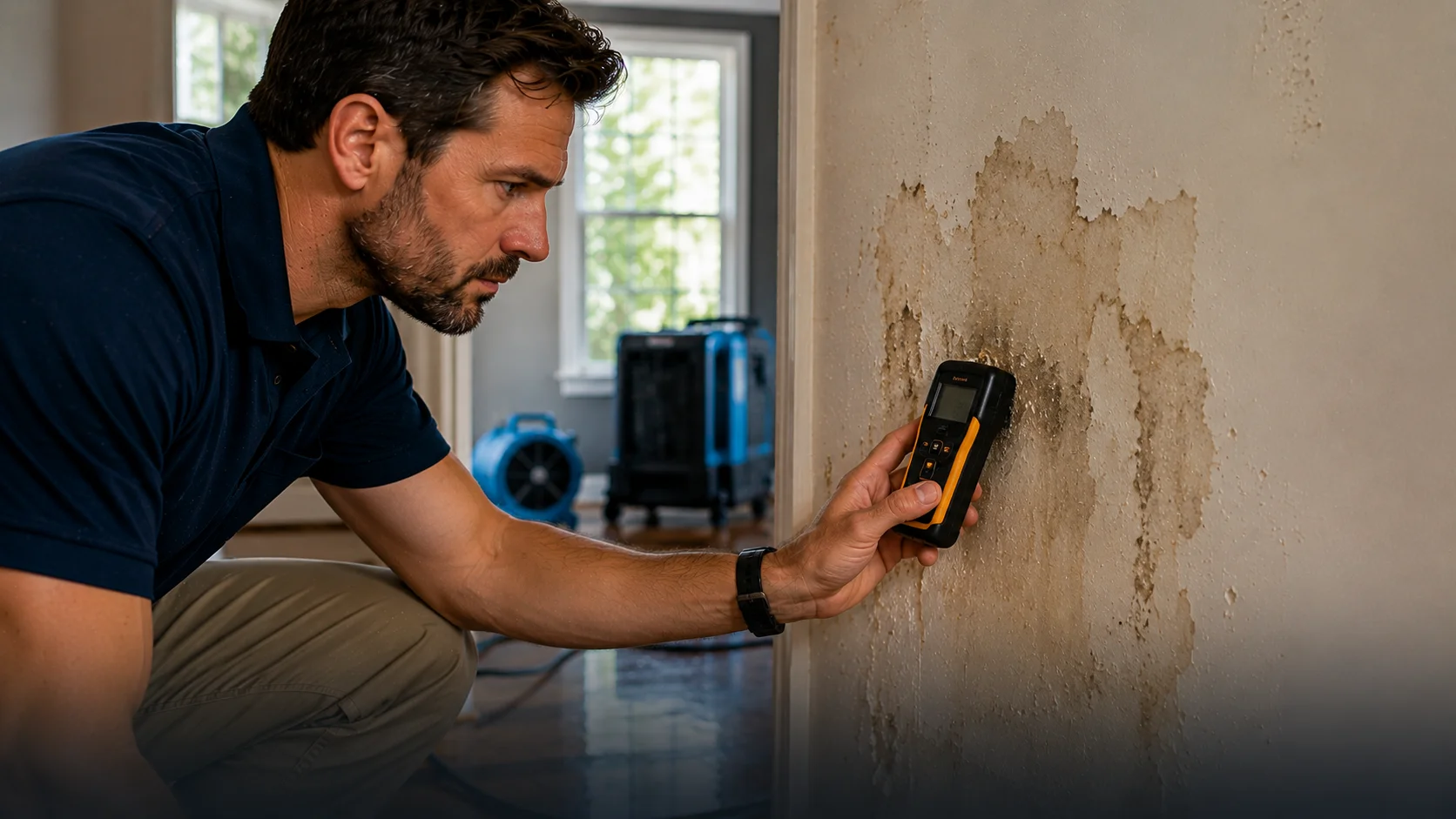
Moisture meters are commonly used during water damage inspections to help identify wet materials, hidden moisture, and drying progress after leaks, floods, burst pipes, or appliance overflows.
First actions
Prioritize safety before inspection or cleanup
- Keep people away from sagging or water-filled ceilings.
- Avoid water near outlets, lights, and electrical panels.
- Stop the water source only when it can be done safely.
- Document affected areas before moving or discarding materials.
- Begin extraction and drying after immediate hazards are controlled.
Help Available
Need help after water damage?
Review the next steps and connect with restoration resources available by location.
Why Moisture Meters Matter
Water damage is not always visible. Drywall, flooring, baseboards, cabinets, and ceilings can hold moisture after the surface looks dry.
What A Moisture Meter Can Check
- Drywall
- Wood flooring
- Baseboards
- Cabinet areas
- Ceilings
- Subflooring
Pin And Pinless Readings
Some moisture meters use pins that contact the material. Others scan without pins. Both can help identify areas that may need further review.
Tracking Drying Progress
Moisture readings can be taken over time to help understand whether affected materials are drying properly.
Limitations
A moisture meter is one tool. Readings may be affected by material type, depth, temperature, and surface conditions.
Related Guides
FAQ
Can a wall feel dry but still be wet?
Yes. Moisture can remain inside wall cavities or behind painted surfaces.
Do moisture meters prove mold?
No. They indicate moisture conditions, not mold identity.
Should homeowners rely only on a moisture meter?
No. Moisture readings should be considered with visual inspection, damage history, and safety concerns.
Final Thoughts
Moisture meters can help identify hidden damp areas and support better decisions after water damage.
Next Step
Do not wait if water damage is active.
Water can spread behind walls, floors, and cabinets. Fast response helps limit secondary damage.
Luxesur is an informational website and may connect visitors with independent third-party providers. We are not a restoration contractor, roofing contractor, engineering firm, insurance adjuster, or emergency service. Availability varies by location. Call 911 for an immediate danger.