Luxesur National Guide
Water DamageThermal Imaging Water Damage Guide
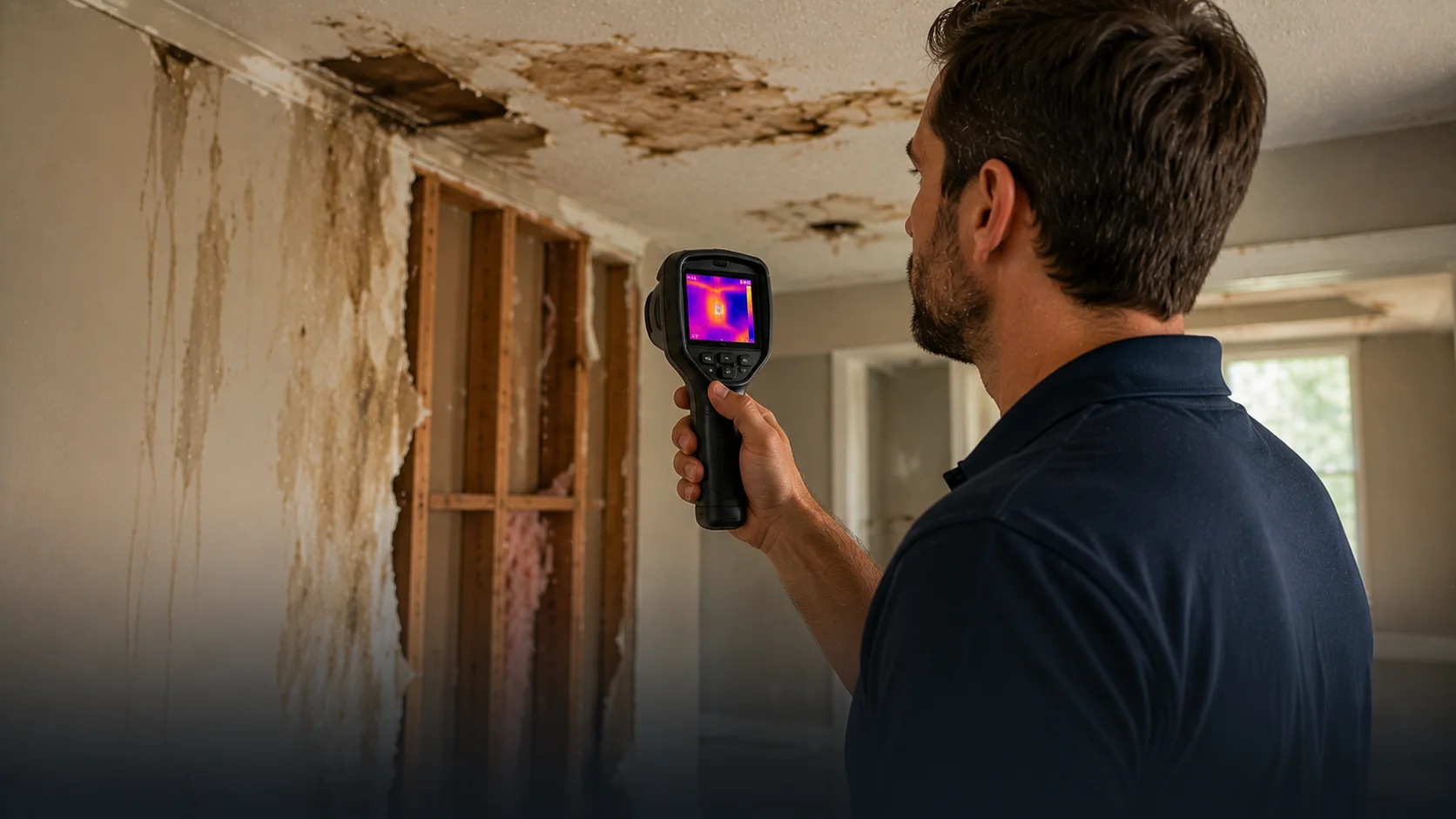
Thermal imaging can help identify temperature differences that may suggest hidden moisture behind walls, ceilings, floors, and other building materials after water damage.
First actions
Prioritize safety before inspection or cleanup
- Keep people away from sagging or water-filled ceilings.
- Avoid water near outlets, lights, and electrical panels.
- Stop the water source only when it can be done safely.
- Document affected areas before moving or discarding materials.
- Begin extraction and drying after immediate hazards are controlled.
Help Available
Need help after water damage?
Review the next steps and connect with restoration resources available by location.
What Thermal Imaging Does
A thermal camera shows temperature patterns. After water damage, damp areas may appear different from dry surrounding materials.
Where It May Help
- Ceiling leaks
- Wall cavities
- Baseboards
- Flooring edges
- Cabinet areas
- Areas below bathrooms or kitchens
Why It Is Useful
Thermal imaging can help narrow down where moisture may be present without immediately opening walls or ceilings.
Thermal Imaging And Moisture Meters
Thermal imaging is often used with moisture meters. The camera can identify suspicious areas, and a meter can help check material moisture.
Limitations
Thermal cameras do not see through walls. They show surface temperature differences that may need further inspection.
Related Guides
FAQ
Can thermal imaging find every leak?
No. It can show suspicious temperature patterns, but it cannot confirm every leak by itself.
Does a cold spot always mean water damage?
No. Air leaks, insulation gaps, and HVAC effects can also create temperature differences.
Is thermal imaging useful for insurance documentation?
It may support inspection notes, but photos, records, moisture readings, and policy review are also important.
Final Thoughts
Thermal imaging is useful when water damage may be hidden behind finished surfaces.
Next Step
Do not wait if water damage is active.
Water can spread behind walls, floors, and cabinets. Fast response helps limit secondary damage.
Luxesur is an informational website and may connect visitors with independent third-party providers. We are not a restoration contractor, roofing contractor, engineering firm, insurance adjuster, or emergency service. Availability varies by location. Call 911 for an immediate danger.