Luxesur National Guide
Water DamageHomeowner Water Damage Assessment Guide
After water damage, homeowners can perform a basic visual assessment to understand what areas are affected, what should be documented, and what safety concerns may exist.
First actions
Prioritize safety before inspection or cleanup
- Keep people away from sagging or water-filled ceilings.
- Avoid water near outlets, lights, and electrical panels.
- Stop the water source only when it can be done safely.
- Document affected areas before moving or discarding materials.
- Begin extraction and drying after immediate hazards are controlled.
Help Available
Need help after water damage?
Review the next steps and connect with restoration resources available by location.
Start With Safety
Do not enter rooms with electrical hazards, sagging ceilings, contaminated water, structural damage, or strong odors. Safety should come before documentation.
Identify The Source
If possible, identify whether the water came from a pipe, appliance, roof leak, toilet overflow, storm event, or exterior flooding.
Check Affected Rooms
- Floors
- Baseboards
- Walls
- Ceilings
- Cabinets
- Closets
- Adjacent rooms
Look For Warning Signs
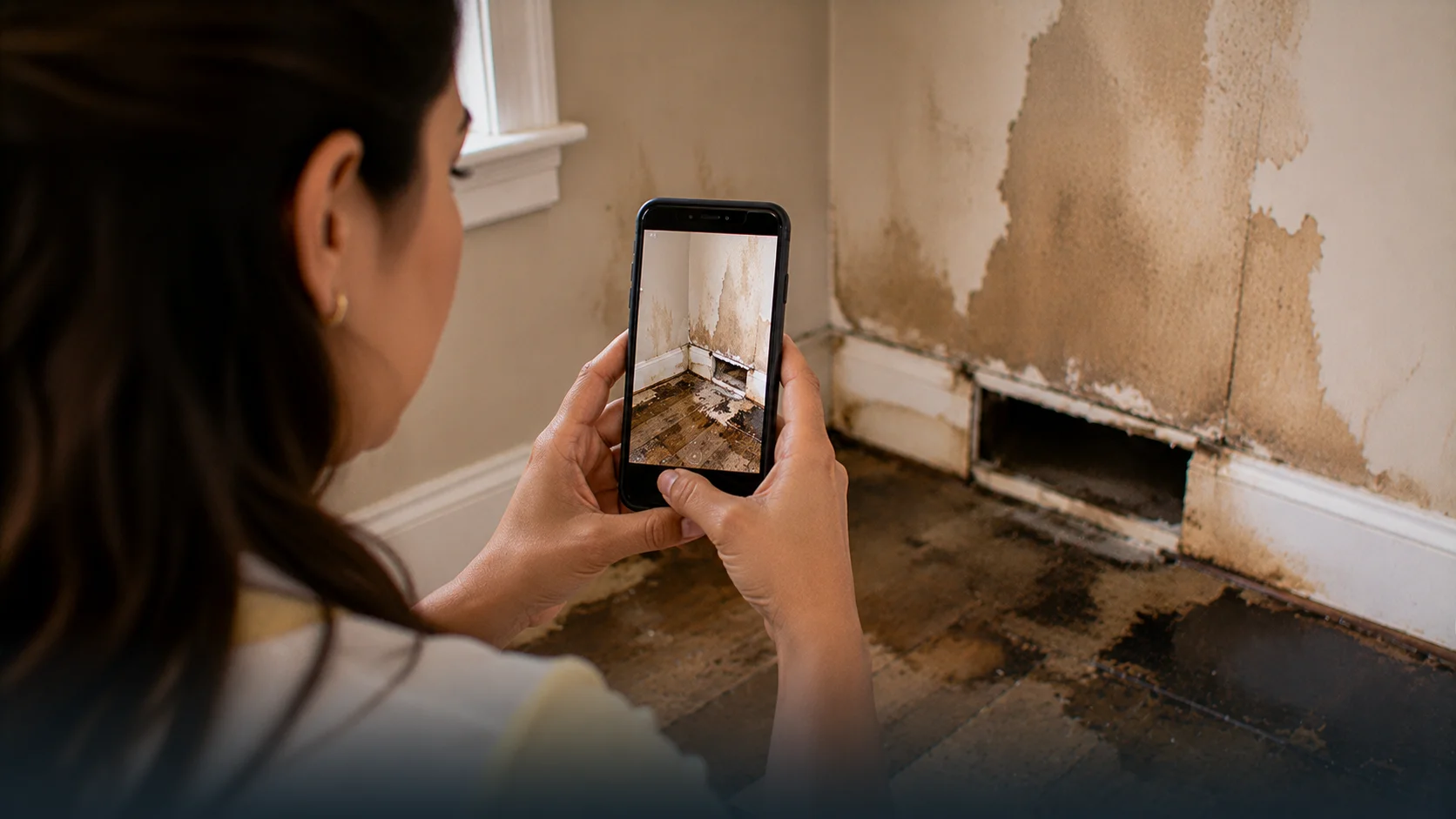
Common warning signs include stains, bubbling paint, soft drywall, warped flooring, musty odors, peeling trim, and visible mold-like growth.
Document Before Conditions Change
Take photos and videos of the affected rooms, water source, damaged materials, and personal property before cleanup changes the scene.
When To Get Help
Consider help when water is widespread, hidden moisture is likely, mold is visible, sewage is involved, or structural areas are affected.
Related Guides
FAQ
Should I inspect behind walls?
Homeowners should not open walls unless they understand the risks. Hidden areas may require professional evaluation.
What if the damage looks minor?
Small visible damage can still involve hidden moisture, especially near baseboards, cabinets, and wall cavities.
Should I document before cleanup?
When safe, yes. Documentation before cleanup can preserve important details.
Final Thoughts
A homeowner assessment is not a full inspection, but it can help organize next steps after water damage.
Next Step
Do not wait if water damage is active.
Water can spread behind walls, floors, and cabinets. Fast response helps limit secondary damage.
Luxesur is an informational website and may connect visitors with independent third-party providers. We are not a restoration contractor, roofing contractor, engineering firm, insurance adjuster, or emergency service. Availability varies by location. Call 911 for an immediate danger.