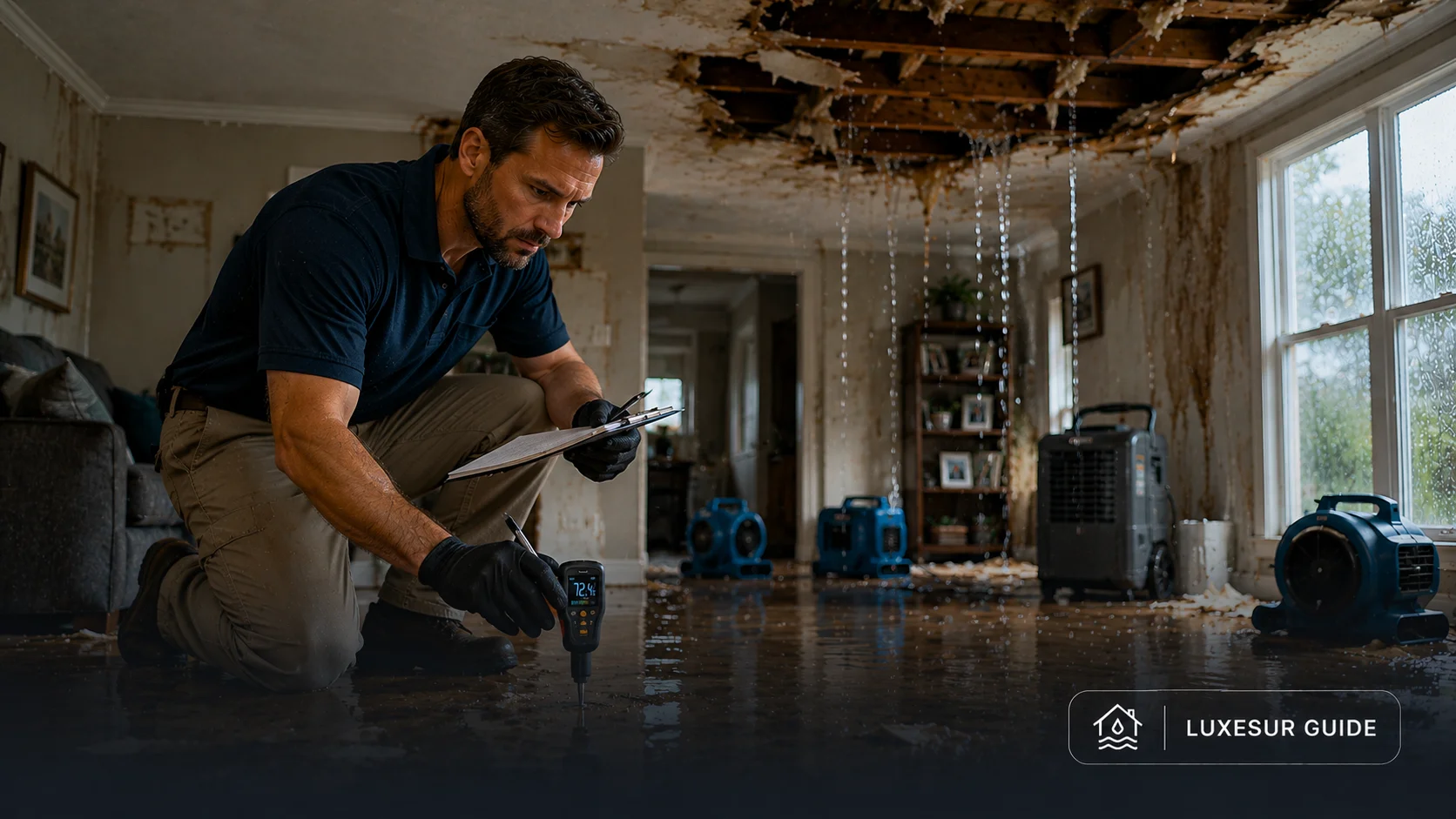
Quick Actions
- Stop the water source if it is safe.
- Avoid standing water near electrical outlets or appliances.
- Photograph standing water before removal.
- Move valuables and electronics away from wet areas.
- Remove small rugs and loose items.
- Begin water removal only when the area is safe.
- Contact a restoration professional if water entered walls, flooring, cabinets, or multiple rooms.
- Use towels or a wet/dry vacuum for small clean-water areas if safe.
- Do not use household vacuums on water.
- Avoid contact with sewage, floodwater, or contaminated water.
- Remove water from corners, closets, and low areas.
- Check adjacent rooms for water migration.
- Monitor flooring, baseboards, and wall edges.
- Increase airflow if electrical systems are safe.
- Use dehumidifiers when available.
- Remove saturated porous items.
- Check under rugs, carpet, and padding.
- Watch for odor, staining, and soft materials.
- Do not assume the area is dry because the surface looks dry.
- Photograph all affected areas before and after water removal.
- Save receipts for equipment, cleanup, or emergency services.
- Record the date and time water was discovered.
- Keep notes from insurance or restoration conversations.